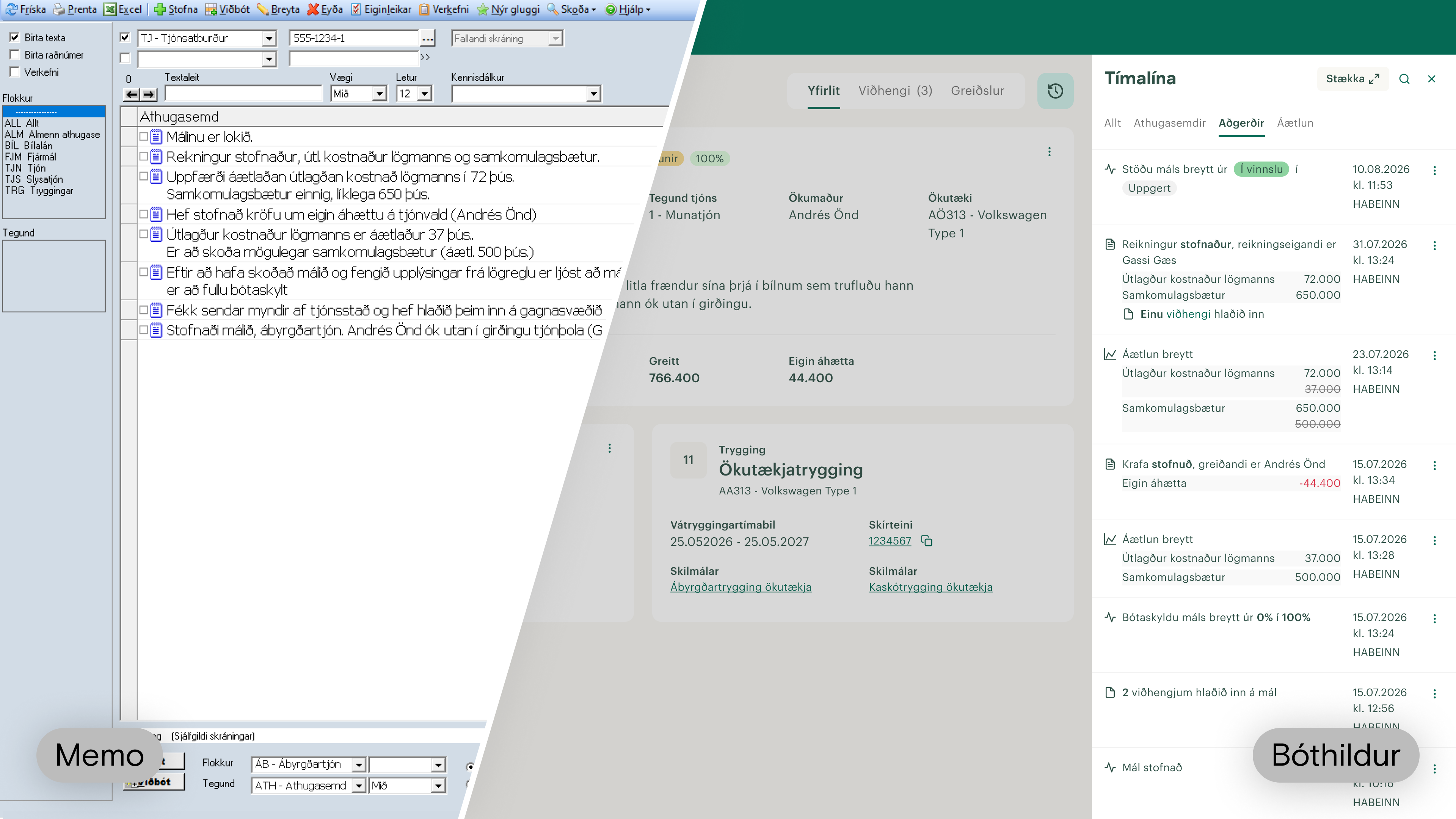
A system built on memory
When claims representatives at TM process a claim, there's a lot to keep track of. Beyond managing case data and assessing liability, they also need to document every contact and interaction with different parties such as repair shops, contractors, lawyers, and claimants. For about 20 years, the notes application Memo has been used for this work. There, claims representatives log notes, record phone calls, and track changes to claim status. Many claims handlers simply describe Memo as "the heart of the job."
Claims representatives access Memo through the so-called Green System, an in-house text interface that manages claims data, in order to view notes on a claim. The Green System was never well suited to tracking claims progress, so Memo was introduced to fill that gap. The problem is that Memo doesn't support adding new functionality, so important data and history have remained locked into a system that couldn't evolve.
Two systems, one record
TM and Kolibri have spent the last few years developing Bóthildur, a purpose-built claims processing system that claims representatives will use for all of their work. Rather than simply switching over to Bóthildur and leaving Memo behind as a separate, disconnected system for older claims, we decided to build a notes functionality directly into Bóthildur that shares data with Memo. In Bóthildur, we simply call it the Timeline. The Timeline in Bóthildur and the notes in Memo are synced in both directions (two-way sync), so a note entered in either system appears instantly in the other. Older notes remain visible and searchable, new notes are logged wherever the claims representative happens to be working, and claims that have been open for years retain their full history.
Building fast, the right way
Moving note-taking from a twenty-year-old system that claims representatives trusted deeply was never going to be a small undertaking. Using AI as part of the development process is what made the project feasible. Not by having AI generate the solution end to end, but by using it as support along the way. It helped make a project that had previously never been prioritized, due to its technical scope, achievable within a reasonable timeframe.
Not just notes
The Timeline in Bóthildur also created room to develop functionality that Memo could never offer. Many actions that claims handlers previously had to log manually in Memo, such as a change in claim status, the purchase of a damaged vehicle, a liability decision, or the receipt of new documents, are now logged automatically the moment they happen in Bóthildur. This saves claims representatives time and creates a more consistent, complete record for each claim, rather than one that depends on which details a person happened to remember to log at the time.
Smaller innovations are also starting to emerge. With features like "Pin to top," claims handlers can flag the note that matters most on a given claim, a simple feature Memo never offered. It's an early sign of what becomes possible once note-taking is part of a system that can keep evolving alongside the needs of the people who use it.